• About

Kathy Stoddard Torrey

~ Leadership Coach and Trainer

Kathy Stoddard Torrey

Category Archives: Uncategorized

 Going All In

07 Tuesday May 2019

Posted by Kathy Stoddard Torrey in Emotional Intelligence, Leadership, Motivation, Resilience, Uncategorized

≈ 4 Comments

Tags

#LeadershipRules #LeadYourselfFirst #KathySays, #mindset, #MovingForward

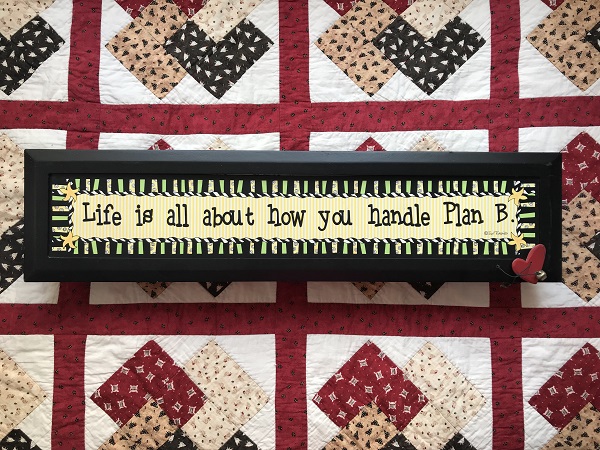
Plan B 600 px

I recently spoke to my Ex-Husband, Oldest Son, and Youngest Son all in one day. There was a time when I would have felt that it had been a wonderful day. However, times are not what they were, and all three conversations were distinctly unsatisfying.

The bottom line is that three people who were once closest to me and each other aren’t close at all anymore. The reason is a series of complicated stories that are not mine alone to tell. It feels like a Greek tragedy where everyone has done what they had to do to be true to themselves and no one is wrong, yet no one is exactly right, either.

The conversations unsettled me. I wallowed a bit in the fact that I have failed in one of my life’s major goals. I spent decades creating a loving family. At 22 years old, I decided to marry my Ex and make family the center of my life. I consciously decided to make family my first priority and career second. I gave up a job offer at a prominent PR firm to follow my new husband to Germany. It was a choice, and I made it on purpose.

My Ex and I had six years together before we had Oldest Son. They were very happy times. We were young, healthy, hopeful, and in love. My decision to put family first appeared to be a very good one.

Then we had Oldest and Youngest Sons within two years of each other. We were a young military family who stuck together as we moved. My mother moved in with us and made us a happy family of five. My decision to put family first appeared to be a very good one.

The kids grew, and we were all a team. We all supported my Ex in his military career. It felt good to have common goals and to work together at Cub Scouts, Boy Scouts, and military life. My mom’s presence made our lives easier and more fun. I enjoyed all the phases of being a mom and staying home with my two boys. My decision to put family first appeared to be a very good one.

We had rough years individually and together. The boys were teens who made some bad teenage decisions, but we got through. They became young men in college who made some more not-great decisions, but we got through. My Ex deployed twice, and I had brain surgery during the first deployment. Tough times, but we got through. I began to work and felt like I could jump in and progress quickly in a long-postponed career. My decision to put family first still felt like a good decision.

My decision to put family first was influenced by a story that my high school basketball coach told me. He was divorced and single at that time. He told me that he had spent Christmas day alone, driving through town looking at all the lights. He said it was nice, but the melancholy tone in his voice and the pained look in his eyes told a different story. At 15 years old I decided that I never wanted to find myself in that position. I wanted always to have family around me for holidays.

Fast forward to now. I live alone in a small condo. I share walls and ceiling with others. My beloved Honda Pilot whom I call Amber sits out front with no shelter. She is my view from my front windows. Other people’s vehicles are my view in the back. Not one relative lives in the state that I live in. Oldest son lives with my grandchildren in New Jersey. Youngest son and his new bride live in Texas near my sister and her family. I am now almost 60 years old. I’ve spent a lifetime creating a family that has disintegrated. Putting family first doesn’t feel like the best decision I’ve ever made. Maybe it was and I just failed. I failed at my life’s main work.

Now, I spend most of my time alone. I have good friends where I live. I enjoy them and depend on them. I am working to create a community here. I visit Oldest Son and Youngest Son individually. It is Plan B. Plan A failed, and I feel like a failure trying to make the best of a situation I do not want to be in.

After wallowing about the unplanned results of my life and my feeling of being a complete failure, I remembered the most valuable lesson that I learned when getting my MBA. It was taught in terms of financial investments, but it applies to all aspects of life. When deciding what to do when moving forward, do not consider the sunk costs – what’s already been invested. Forget the past, and look hard at the present. Given the current situation with no thought to the past, what is the best thing to do? I translate that to: We are where we are. What do we do from here? More accurately now: I am where I am. What do I do from here?

Not considering past expectations removes an enormous emotional burden. I use a hurricane metaphor to help me get past the recent changes in life. A huge hurricane came through that destroyed everything and caused me to start life again. It wasn’t my fault, and there was nothing I could have done to avoid it. That mindset helps me see the current situation more clearly because it clears all regrets. Whether it’s true or not doesn’t matter. I am where I am, and blame and failure are irrelevant. Nothing can change the present.

The future is another matter. It can be changed! Or not. I could continue to wallow and rewind the past in my head, which would lead to an icky future that is not much different than the present. Good thing I have a Magic Wand of Destiny and the Power of Choice. I’ve written a lot about goals, making intentional choices, finding your Big Why, and taking baby steps forward. Insert all of that information here. I am assessing my current situation objectively, finding my motivation, and making a plan.

However, there is another thing to consider that will help – mindset. I read a story in leadership workshops from the book Whistle While You Work by Richard Leider and David Shapiro. Leider tells about a time that he went on an East African adventure with Outward Bound. The group found themselves walking through tall grass, and one person saw a lion. The grass is called Lion Grass because it’s one of a lion’s favorite hunting grounds.

The gravity and danger of their situation suddenly hit home to the person who had seen the lion. He sat down and refused to go on. He wanted to turn back, but the truck that had dropped them off was en route to the meeting place ahead of them. There was nowhere to go back to. I can definitely relate to the situation and the feeling!

The leader talked with the shaken man and explained the situation. It didn’t help. The man refused to move. Then the leader offered an Outward Bound motto: “If you can’t get out of it, get into it!” In other words, if there is no way to remove yourself from an unwanted situation, the answer is to completely get into it so you can move yourself through it as quickly as possible.

I’ve actually reminded myself of this concept several times throughout my life. If I took on a task or job that I didn’t like but didn’t want to quit, I chose to completely get into it. The journey was less painful, I was successful, and the end seemed to arrive more quickly.

So, what does “getting into it” look like? It’s about being all in. A friend once told me that she liked watching me play basketball in high school because when I played, I was all in. To me, it means that no part of me is playing the observer; all of me is completely present in the experience.

That is how I want to be now as I create a life that is nowhere near the expectations I held for decades. I want to be all in. I want to really get into it. I want to be fully engaged with no part of me sitting on the sidelines complaining or being hesitant. I am drawing my line in the sand and stepping over it into a life I completely accept and intend to enjoy. I am where I am, and I’ve decided to like it.

P.S. This little girl is my current role model: https://www.youtube.com/watch?v=qR3rK0kZFkg


For a little bit of fun leadership development, join 53 Leadership Challenges at KathyStoddardTorrey.com.

Want to go further with your professional development? Check out the courses offered at PositiveEffectLeadership.com.

If you are interested in taking your career to the next level quickly, contact me for a sample coaching session at KSTorrey@tapferconsulting.com.

The Danger of Assumptions

05 Tuesday Feb 2019

Posted by Kathy Stoddard Torrey in #Communication, Emotional Intelligence, Leadership, Uncategorized

≈ Leave a comment

Tags

#dangerofassumptions, #factsnotfiction, #LeadershipRules #LeadYourselfFirst #KathySays

As leaders, we want to collect accurate knowledge in a way that builds and maintains positive relationships. It’s one of the ways that we cultivate our personal influence. Unfortunately, we sometimes base our actions and opinions on assumptions, rather than accurate information.

Assumptions are not all bad. We walk up to a door, and we assume that the doorknob is going to turn and the door is going to open. We base a lot of our lives on assumptions because they save us time and make life easier. However, it’s important to be aware of when we’re making assumptions.

In conflict resolution workshops, participants role-play a scenario about laundry. Almost all of them take on the stereotypical gender role for laundry. Male or female, if they are the ones with responsibility for laundry, they take on the societal role of females. During the discussion after the role play, participants are surprised at how easily they assumed women do the laundry. No one questioned or even realized the assumptions they were making. The strength of the gender roles was surprising because the scenario was based on a Marine who did the laundry and didn’t feel he was appreciated. We don’t want to hold any assumptions, but we often do without even realizing it.

The real danger of assumptions is that we don’t realize that they are assumptions. Many times, we transform the assumptions into absolute truth in our heads. For example, somebody doesn’t say good morning to us, and we assume that the person is ignoring us on purpose. The truth may be that he or she had a really bad morning and didn’t even notice us. However, we make up this story in our head about the person being uppity and thinking that they are better than us. We move forward as if that assumption is true and treat the other person accordingly. We allow an assumption that probably isn’t true to influence our relationship in a negative way. The poor person who didn’t say good morning will probably be mystified by our chilly and maybe even unprofessional behavior.

As a leader, it is important to stop and ask, “Is this something I really know, or am I making an assumption?” The only way to know if something is true or not is to ask. Perhaps a person’s poor performance is due to laziness, but it could also be caused by a lack of training, illness, or just not understanding that a particular task is a priority. As leaders, it’s our job to find out for sure, not assume.


For a little bit of fun leadership development, join 53 Leadership Challenges at KathyStoddardTorrey.com.

Want to go further with your professional development? Check out the courses offered at PositiveEffectLeadership.com.

If you are interested in taking your career to the next level quickly, contact me for a sample coaching session at KSTorrey@tapferconsulting.com.

Power of Positivity and Caring

29 Tuesday Jan 2019

Posted by Kathy Stoddard Torrey in Emotional Intelligence, Leadership, Uncategorized

≈ Leave a comment

Tags

#LeadershipRules #LeadYourselfFirst #KathySays, #noticingthegood, #PowerofPositivity

There is a growing body of evidence on the power of positivity and caring in leadership. An increase in positivity results in an increase in productivity and efficiency. It also improves morale and reduces turnover. Those are some important results for a leader to attain.

Our own personal experiences support the research. Think of a great leader you have known. Did that person have a positive attitude? In workshops, everyone answers yes. Was that person caring? That is to say, did that leader have your best interests at heart even if he or she was tough on you? Once again, most everyone in workshops answers yes.

One of the fundamental goals of leadership is to create and maintain positive relationships. Really, maintaining positive relationships with the people at work is basic professionalism. When we have positive relationships, both parties in the relationship can focus on work. We don’t take part in anything petty or negative, and no one is distracted from the job at hand.  That does not mean that we need to be best friends with people at work, it just means that we have relationships based on respect and kindness.

Maintaining a positive attitude and work environment is a challenge. Humans are hardwired to notice and hold on to negative situations and events. It’s part of our nature. We can change our natural tendencies, but it requires some discipline and a commitment to choosing differently. We have to wave around the Magic Wand of Destiny and CHOOSE to notice and remember the positive.

Identifying and solving problems are primary responsibilities of leaders, and we don’t need to stop doing those things. However, we do need to begin noticing what is going right. Fortunately, there are many more positive events in a day than negative. Think about it—we do all sorts of things right in a day, and all anyone notices or comments on is the negative. It’s frustrating! We want to notice and comment whenever we see someone doing something right.

Noticing and commenting positively on actions that we want to see again is powerful. It lets people know that we are paying attention to what they do, that we appreciate their efforts, and that the task itself is something worth doing. The best way to get someone to do something again is to praise them for doing it. It’s an easy motivational technique that also builds the positivity of the relationship.

When we create positive relationships, we are using personal influence as opposed to positional power. In a leadership position, you have power over the people who work for you. Perhaps you have some options to give awards. You definitely have the power to discipline. Positional power is bestowed on you with your job title, and it is not the best long-term motivational technique.

Positional authority is effective as long as you are watching your employees. If we use the metaphor of the carrot and the stick, positional authority is using the stick to threaten people. It is highly effective if we are standing in front of the person. The carrot is positive incentive. When we create positive relationships, we are using our personal influence. People want to work for us, and they keep working when we are not present.

In order to create a positive relationship, one must have a positive interaction ratio of at least five-to-one. That is five positive interactions for every one negative interaction. Negative interactions include developmental feedback, which leaders must give. The only way to maintain the required positivity ratio is to increase the number of positive conversations. The positivity ratio is in alignment with other research that found people are most motivated by being acknowledged and appreciated for their contributions.

Not everyone who works with you will be easy to get along with. Their negative attitude and actions can make the creation of a positive relationship more difficult. We can overcome the challenge, but it takes determination, self-discipline, and some knowledge. Knowing something about people can make it easier to create a positive relationship with them. The author of The Five Dysfunctions of a Team, Patrick Lencioni, found that just knowing each other’s birth order and a childhood challenge increases trust. We can get to know one another better with something as simple as starting meetings with an icebreaker. It’s also a good idea to take some time to chat with people. Short chats are not a waste of time because they increase familiarity, trust, and positivity.

Granted, there is a fine line between getting to know someone and getting too personal at work. Leadership is an art, not a science. However, you cannot be an exceptional leader without knowing and caring for the people who work for you. It can be done within reasonable, professional boundaries.

Studies have shown that caring leaders are more effective, and now we have some research-backed actions that we can take to increase our capacity and ability to care about others. Dr. Barbara Fredrickson found that people who participated in loving-kindness meditation became more compassionate and empathetic toward others. There were also emotional and physical health benefits and an increased tendency to see things in a good light and be more optimistic about the future. That is an impressive list of results for a meditation practice of 60 minutes a week. There are lots of guided loving-kindness meditations online.

Dr. Fredrickson also found that shared positive moments can have positive emotional and physical results for individuals. The more positive moments we share, the easier it becomes to create more. We also increase our own positivity in the process. The shared moments of positivity don’t have to be with people that we know for us to gain the benefits. Our discussion is focused on work, but you can practice engaging others in a positive way in line at the grocery store.

Being positive does not mean that you have to be Little Mary Sunshine and never offer developmental feedback. Being positive and caring does not mean that you give up maintaining standards and discipline. Leaders must give developmental feedback when needed and not shy away from tough discussions. However, it is important to intentionally create positive conversations in order to maintain the positivity ratio of at least five-to-one. The main behavior changes required are being pleasant, noticing what is going right, and then commenting on it in an appreciative way.

The book FISH! gives us an excellent example of how a group of determined people can create a positive culture. A group of fishmongers decided that they didn’t want to work in a negative environment anymore. They focused on four things that increased the positivity of their work environment: Play, Make Their Day, Be Present, and Choose Your Attitude. The results were amazing. Their work became more enjoyable and their business more successful.

Keep in mind, a leader’s job is to help everyone else be successful. If the people around you are failing, you are failing. Your job is to create success for everyone. One of the most effective ways to help people be successful is to help them focus on work and to motivate them. Creating and maintaining positive relationships can accomplish both of those things.

You can create a more pleasant work environment, motivate people in lasting ways that are effective when you aren’t watching over them, and increase productivity and efficiency just by waving around the Magic Wand of Destiny and intentionally choosing to be positive.


For a little bit of fun leadership development, join 53 Leadership Challenges at KathyStoddardTorrey.com.

Want to go further with your professional development? Check out the courses offered at PositiveEffectLeadership.com.

If you are interested in taking your career to the next level quickly, contact me for a sample coaching session at KSTorrey@tapferconsulting.com.


Building and Rebuilding Trust

22 Tuesday Jan 2019

Posted by Kathy Stoddard Torrey in Emotional Intelligence, Leadership, Psychological Safety, Uncategorized

≈ Leave a comment

Tags

#buildingandrebuildingtrust, #EmotionalIntelligence, #LeadershipRules #LeadYourselfFirst #KathySays, #learning, #trust

trust chain 600 px

Think back to the leader that you consider to be a role model. Do you trust that person? Participants in workshops always answer yes. We trust the people who we are willing to follow. Great leaders need to be trustworthy in order to have the personal influence needed to get people to follow them. We build trust by being consistent. Great supervisors are consistent and reliable.

Honestly, none of us are going to be reliable and consistent all the time, but we need to manage it most of the time. Our employees need to know that we aren’t going to yell at them when they come to us with a problem. They need to feel confident that we are going to be calm and reliable. We’re going to ask questions and figure out how to fix the situation. We want our employees to feel that we are a stable, reliable force that is going to help them. Until employees feel confident that their leaders are reliable and consistent, they are going to be tentative and watchful—maybe even subversive or dishonest in order to avoid an unpleasant confrontation.

Fortunately for us, people tend to extend trust to people at the beginning of a relationship. Trust is a gift that we need to appreciate and work to keep. We want to avoid breaching trust because once it’s gone, trust is difficult to gain back. However, all is not lost if we lose someone’s trust. There are things that we can do to regain it as quickly as possible.

The first thing to do is to admit that we’ve done something disappointing. If we made a bad decision, forgot something, or lost our temper, we should admit it. The second thing to do is apologize. Some old-school thought states that leaders should never apologize. It’s based on the belief that leaders have to be perfect to be great leaders. The problem with that thinking is that none of us are perfect. We are human, and we make mistakes. We only make matters worse if we don’t admit them and apologize.

We also need to do whatever we can to fix the problem if that’s possible. An apology goes a long way, but we also want to do what we can to make things right. If we forgot to do something, how can we get it done and deal with the results of forgetting? If a plan doesn’t work, it’s time to regroup and try again. We help to rebuild trust when we do what we can to repair any damage that we’ve done.

After we have broken trust, we will have to continue to behave in a consistent, reliable manner until everyone feels comfortable again. It may take some time, so we need to be patient.

In summary, when we break trust, it’s important to acknowledge it, apologize, and do what we can to fix it. Then we continue to be trustworthy until whoever was affected decides that they can trust us again.


For a little bit of fun leadership development, join 53 Leadership Challenges at KathyStoddardTorrey.com.

Want to go further with your professional development? Check out the courses offered at PositiveEffectLeadership.com.

If you are interested in taking your career to the next level quickly, contact me for a sample coaching session at KSTorrey@tapferconsulting.com.


I did my best to …

15 Tuesday Jan 2019

Posted by Kathy Stoddard Torrey in Leadership, Motivation, Uncategorized

≈ Leave a comment

Tags

#DidIDoMyBestTo, #Goldsmith, #LeadershipRules #LeadYourselfFirst #KathySays, #motivation, #Triggers

I am reading Triggers by Marshall Goldsmith, and one of his recommendations has made a big impact in my life. He recommends a system to keep us on track to achieving our goals that involves asking questions of ourselves each evening. (Actually, Goldsmith pays someone to call and ask him his questions, so I that’s an option.)

In his earlier books, he put the questions in a yes- or- no format. For example, one question might be “Did I exercise today?” You could also ask yourself, “Was I a good spouse today?” I have to admit that the questions in this format did not resonate with me.

In Triggers, he modifies the system. Instead of yes/no questions, each question begins with “Did I do my best today to…” He got the idea from his daughter, Kelly. They did some research around the new format’s effectiveness, and those types of questions work better.

The new format also works for me. “Did I do my best to…” gives me a lot more information than just asking if I did it or not. It also makes me feel like less of a failure if I don’t get something done.

I came up with a list of questions. One of them is “Did you do your best to maintain an orderly and peaceful environment?” I have had a relatively crazy week and a half. I made an unplanned trip to help with a minor family emergency. I returned home and then spent the next day on last-minute details for two workshops. The next morning, I packed up, facilitated a workshop, stayed in a hotel one night, facilitated another day, and returned home. Needless to say, my home was a bit of a mess, with piles of clothes and papers scattered about. I would have to answer “no” if you asked me if I had maintained an orderly and peaceful environment.

However, on the morning that I left for the workshop, I was ready about 20 minutes before I had to leave. I took the time to put a few things away and load the dishwasher. My condo wasn’t perfect, but I did do my best on that day to maintain an orderly environment – and felt good about it. I didn’t do perfectly, but I did do my best under that day’s circumstances.

I told my friend about the question system, and she came up with a good one that I am now also using: “Did I do my best to stay healthy and vibrant today?” I’ve been slacking off on my exercise and eating habits. This question gets me to reflect on how I’ve supported my health daily.

So far, I don’t record my answers as Goldsmith suggests. I can see the value of monitoring trends and progress. I might set up a system that works with my calendar. I do not see myself setting up an Excel spreadsheet, as some of Goldsmith’s clients did.

He has a list of 22 questions. That feels overwhelming to me. I cannot focus on that many things at one time. I have three questions right now. There are the two mentioned above and this one: “Did I do my best to earn one million dollars today?” I feel an urge to apologize for such a grandiose goal, but I like it. In my mind it encompasses stewarding money, getting on top of my investments, and creating new business.

Earning money is a top priority in my life right now. Doing my best to make ends meet or make more money aren’t inspiring to me. Making my personal worth equal to at least one million dollars is.

I find it amazing that these questions are as motivating as they are. I look for opportunities to do my best. When I was organizing the workshops across the living room floor, I took a minute to do a plank. Instead of reaching for my iPad and playing Plants vs. Zombies as a break from writing, I get up and pick up a few things or start laundry. The questions are also motivating me to stick with getting my podcast going, despite some frustrating technical issues. (My podcast is going to help me earn a million dollars – in case you were wondering.)

It seems that the key is to pick areas where you want to change behavior and focus on those areas. I don’t have a question about being a good friend because I have a nice pattern and relationships with my friends. I’ve picked three areas for now and want to change my behavior around those.

Behavior change is not easy! Think about past attempts at diet, exercise, and saving money. Goldsmith focuses on behavior change and talks about how environment conspires to keep us stagnant and tempt us. That’s a whole ‘nother topic, but the questions are helping me overcome my environment. I have a great big TV and an iPad sitting next to me that offer mindless breaks.

The questions are helping me be more intentional in my actions and moving me towards my goals. That feels better than watching an episode of Star Trek: The Next Generation – and I really like watching Captain Jean-Luc Picard.


For a little bit of fun leadership development, join 53 Leadership Challenges at KathyStoddardTorrey.com.

Want to go further with your professional development? Check out the courses offered at PositiveEffectLeadership.com.

If you are interested in taking your career to the next level quickly, contact me for a sample coaching session at KSTorrey@tapferconsulting.com.

Clearing Old Dreams

08 Tuesday Jan 2019

Posted by Kathy Stoddard Torrey in Emotional Intelligence, Fresh Start, Uncategorized

≈ 4 Comments

Tags

#alteringavision, #clearingclutter, #LeadershipRules #LeadYourselfFirst #KathySays, #whoamInow

At the beginning of the year, we often create a list of resolutions. The list can include things we want to do, goals we want to achieve, and intentions for how we want to be. However, one of the most useful things that we can do to create a foundation for success is to clear out and organize our physical things.

When I coach clients, we often start by getting rid of stuff. It’s amazing what a clean, spacious, and organized closet can do for you if you are feeling stuck or frustrated in life.

There are lots of people out there who have ideas and structures for getting your home organized. When my own children were small, I found FlyLady. She got me to run through the house for 15 minutes with a trash bag, collecting things to set free for other people’s enjoyment and use. The two questions that she had me ask were “Is it useful?” and “Do you love it?” A yes to either question meant I got to keep it.

Now, of course, Marie Kondo’s system is all the rage. It varies some from FlyLady, but she has us asking the same basic questions. I think that both of them are missing one of the biggest challenges to getting rid of clutter: many objects represent our dreams for the future.

We all have a clear idea of what we want our futures to hold. We don’t always say them out loud, but we have a vision and a mental to-do list. For example, for a few years, I was determined to go to Italy. I had listened to the book Under the Tuscan Sun (which is absolutely nothing like the movie.) The book is a sort of mundane account of a woman and her husband who decide to buy a home in Italy.

My then middle school-aged children mocked me for listening to the author tell her story in her Southern accent. But the story and life intrigued me. I wanted lemon trees and arugula growing along the driveway.

In support of that dream, I bought books about Italy. I got flashcards to learn to speak Italian. They set on the “someday” shelf on the bookcase in my bedroom.

One day I was clearing books and deciding what to get rid of. By that time, the Italy collection had been collecting dust for several years. I hadn’t talked much about my dream, but my then-spouse didn’t have much enthusiasm for the idea. I also realized that I didn’t really want to live that far from my family.

I decided to give up that dream. It hurt, but it was also freeing. There were a lot of “shoulds” wrapped up in the dream, like learning Italian and saving money. It made me sad to give up the dream, but I knew it wasn’t going to happen, and I gave away the books that represented the dream.

We also have a clear idea about who we are and who we want to be. Maybe we see ourselves as crafty moms who gracefully manage to make papier-mâché snakes with our children. Maybe we fancy ourselves as craftsmen of wool or wood. It could be that we see ourselves as learned or athletic. All of these self-identities have physical items that go along with them.

One of the most difficult things for me to get rid of was a pair of rollerblades. At the time, I had always considered myself an athlete. I played sports in high school and continued to be active. In my 20s I could ski backward down a German mountain slope. In my 30s, I carried children and all of their accouterment to various activities. In my early 40s, I carried camping gear and hiked with Boy Scouts as an Assistant Scout Leader.

When I was 49, I had brain surgery to correct an abnormality. I now live with five tiny platinum coils in my brain. In the couple of years before and since, I was not athletic. In fact, I feel nauseous and dizzy if I break a sweat or lift something heavy. I am not who I was by any stretch of the imagination.

I was clearing out the garage and came upon my dusty rollerblades. I had tried them and wasn’t great, but I had hopes of mastering rollerblading. At that moment, I realized that I was never going to rollerblade. Bigger than that, I was no longer athletic. Wow, what a blow that was. It sounds obvious, but moving from who I wanted to be to who I actually was was incredibly difficult.

I put the rollerblades into the give-away pile while sobbing. It was letting go of the self-image and the thing that represented that self-image.

Most of the things that clutter our lives are “one-day” things that represent what we want to do or who we want to be. Those things are beyond “Do I love it?” and “Is it useful?” The questions are “Am I ready to accept who I really am?” and “Am I ready to change my vision of the future?”


For a little bit of fun leadership development, join 53 Leadership Challenges at KathyStoddardTorrey.com.

Want to go further with your professional development? Check out the courses offered at PositiveEffectLeadership.com.

If you are interested in taking your career to the next level quickly, contact me for a sample coaching session at KSTorrey@tapferconsulting.com.

2019 Intention: Small Acts = Big Impact

01 Tuesday Jan 2019

Posted by Kathy Stoddard Torrey in Leadership, Uncategorized

≈ 6 Comments

Tags

#kindnessmatters, #LeadershipRules #LeadYourselfFirst #KathySays, #smallactsbigimpact

friendly driver 600 px

During the height of holiday franticness, I was driving around town with a friend. We both commented on the demonstrated lack of Christmas spirit by our fellow drivers. People cut in front of us, sped past us, and were generally rude. It saddened me to see that the holidays had brought out worse, rather than better, behavior. Few of us were helping with peace on earth or showing good will toward others.

I don’t think we realize the impact that our actions have on others. Small acts can make a huge difference in someone’s life for good or ill. I was reminded of a time more than a decade ago when two people took the time to do a good deed. I feel immense gratitude for their actions to this day. Seriously, it makes me tear up with thankfulness whenever I think about it.

We were on a family vacation. Honestly, the details of where we were and where we were going are fuzzy. I think we were traveling by public transit to a ballpark outside of NYC. There were a lot of people on the train with us. My two sons were elementary school-age. When we moved to get off, my oldest son got trapped and didn’t get through the door in time. He was on the train, and the rest of us were off.

His father made a valiant effort to force the door open and was almost drug away by the train. I had read a lot of parenting and safety books and knew what to do. I went to the window, looked at my son and yelled through the glass, “Get off at the next stop and wait for us. We will be there as soon as we can.”

He was standing there, a small child in a group of adults. What happened next still brings a lump to my throat. A man and woman traveling separately both stepped towards him. One yelled through the glass, “I have him.” The other yelled, “I will wait with him.” The relief on both my son’s face and mine was obvious.

We all jumped on the next train, and when we got to the next stop, we saw my son standing on the platform with a man who was chatting amiably with him. The woman stood apart but was watchful. I get her and love her. She was making sure that the man was honorable. I was so relieved and grateful that I could have hugged them both and made them my best friends for the rest of our lives.

I have no idea what was on their agenda for that day. I don’t know if they missed meetings or were late for appointments. However, the 20 minutes they gave to us were some of the most significant moments in my life. I hope they know what an enormous impact they had in my life and my son’s. I hope they can feel my gratitude flowing toward them now.

Smaller, less time-consuming acts also can have a positive impact. Any time other drivers let me over into their lane, I wave to say thank you and send a small blessing for a good day and life their way. They have lowered my stress and improved my day.

Commitments to consistently and purposefully help can also change lives. I am fortunate to have a sister and son who made the commitment to call me every day when I was having a rough time. 2017 was a terrible year for me – lots of change and uncertainty. Much of the time, I was desolate and depressed. To be perfectly honest, I felt suicidal much of the time. I doubt that anyone, even my sister and son, knew the depth of my despair.

Yet they called over and over. They chatted with me and gave me hope. They knew I was sad and struggling and wanted to help. At the time, they had no idea how much they helped. They were literally my lifelines.

My son called as he drove home from work. There were construction and a weird traffic pattern that required him to cross lanes of traffic, which was usually at a crawl. He groused and yelled most days because no one was letting him get over. The other drivers would nudge the car ahead to be sure that he had no way to get in.

My call to everyone is “Let Andrew over.” You will improve Andrew’s day. You will ease a mother’s heart. You will actually feel better for the act of kindness. You will be supporting someone who is helping another. You will make the world a better place.

New year, new way of thinking. We all have the power to improve the lives around us and our own lives through small acts of kindness. When someone needs to get into your lane – in any real or metaphorical sense – pretend it’s Andrew, and please let him over. Your action will earn my undying gratitude and a blessing on your day and life.


For a little bit of fun leadership development, join 53 Leadership Challenges at KathyStoddardTorrey.com.

Want to go further with your professional development? Check out the courses offered at PositiveEffectLeadership.com.

If you are interested in taking your career to the next level quickly, contact me for a sample coaching session at KSTorrey@tapferconsulting.com.

Positional Power v. Personal Influence

18 Tuesday Dec 2018

Posted by Kathy Stoddard Torrey in Emotional Intelligence, Leadership, Uncategorized

≈ 1 Comment

Tags

#carrotandstick, #LeadershipRules #LeadYourselfFirst #KathySays, #personalinfluence, #positiverelationships, Motivation

carrot 650 px

There is a simple motivational model called the Carrot and the Stick. It’s a metaphor. Imagine you are sitting on a wagon that is being pulled by a horse. If you want a stubborn horse to go forward, you can hit it with a stick. This is negative motivation, and it is fear of being beaten that motivates the horse. You could take a longer stick, tie a carrot to it, and put it out in front of the horse. The horse will move forward to try and get the reward. This is positive motivation. For the long term, you get better results from people by using positive motivation techniques – carrots.

Supervisors’ authority that comes from a job title is positional power. As supervisors, we can do things like putting people in for certain awards (i.e., give them carrots), and we have official ways to discipline people (i.e., use a stick to motivate). Positional power is important, but it isn’t what we want to use all the time because it’s only effective when we are with or near the employee. However, when we leave the area, the employee is no longer motivated. In fact, they will probably not work hard and will see what they can get away with. Using positional authority is a last resort.

On a daily basis, we want to use personal influence because it is more motivating and effective. We create personal influence by building positive relationships. Our employees will continue to work when we aren’t present if we have a relationship built on respect and trust. The main focus of the first section of the course is how to cultivate that personal influence.

One of the first steps is to define the qualities and abilities of an exceptional leader. In the workshops, the list created by participants usually includes knowledgeable, compassionate, confident, creative, approachable, humble, honest, trustworthy, trusting, big-picture thinker, motivating, inspiring, constant learner, consistent, and integrity.

In addition, there are two more qualities to highlight. Frontline employees always list two things right up front: listens and is fair. When we pay attention to people when they talk, it’s called active listening. When we practice active listening, we are letting people know that they are worth our time, that they are valuable. Listening with the intent to understand the other person’s point of view helps to build positive, trusting relationships. When discussing “fair,”  most employees mean not showing any favoritism.

It’s important to know that people usually don’t quit their jobs, they quit their bosses. As supervisors, we don’t want to run people off with a negative attitude. Turnover is expensive for an organization. The statistics vary between 50-90% of an employee’s annual salary. If at all possible, we want to keep people working for us and make them successful.

As supervisors, we have an enormous influence over the people who work for us. We can create a pleasant and supportive environment that makes people want to come to work or a negative, fear-filled environment that employees resent and want to escape. We affect the quality of our employees’ lives at work and at home because people carry their dissatisfaction with work to their homes.


For a little bit of fun leadership development, join 53 Leadership Challenges at KathyStoddardTorrey.com.

Want to go further with your professional development? Check out the courses offered at PositiveEffectLeadership.com.

If you are interested in taking your career to the next level quickly, contact me for a sample coaching session at KSTorrey@tapferconsulting.com.

The Power of Really Listening

11 Tuesday Dec 2018

Posted by Kathy Stoddard Torrey in Uncategorized

≈ Leave a comment

Tags

#LeadershipRules #LeadYourselfFirst #KathySays, #nonverbalcommunication, ActiveListening

really listening cropped 600 px

Being a good listener is one of the top two qualities that frontline employees usually list for a good supervisor and leader. So how does an employee know that we are listening? One of the first ways we can let people know that we are listening is with our body language. The most influential piece of any message that we send to someone is the nonverbal part. Nonverbal communication is our facial expression, tone of voice, and body language.

The appearance of listening is as important as actually listening. There are a few things that we can do to make sure we look like we are listening. The first is to squarely face the person talking – shoulders and hips should face the person. We can also lean forward a bit if we are sitting and sit up straight. It’s very important to maintain eye contact. We want to look at the person while he or she is talking. Eye contact can feel a little intense if you aren’t used to it, but we want to maintain eye contact as often and for as long as we can.

There are several body positions that do not give the impression that one is listening for understanding. One is leaning back in a chair with legs crossed and hands behind the head. It’s a control posture; it tells the other person that you are more important and that you might take what they say into consideration. Another position is crossing your arms across your chest. This posture is defensive and tells people that you are guarding against anything that they have to say. Facial expression also has a huge impact. Frowning or looking bored will make a person nervous. It’s best to look friendly and then show reactions to what’s being said. If it’s funny, smile! If it’s serious, look serious.

If our nonverbal message does not match our verbal message, the people we are talking with will go with the nonverbal message every time. If I say the words, “You are doing a good job,” but I roll my eyes, cross my arms, and use a sarcastic tone, the message that you take away is, “I am not doing a good job.” Even though I said you were doing a good job with my words, my body language and tone of voice let you know that I didn’t mean it. Nonverbal communication is powerful and always overrides verbal communication.

Looking like we are listening is important. However, more important is that we actually are paying attention to what is being said. We can be leaning forward and looking at a person and be thinking, “I think we’re out of peanut butter. Is that person still talking? I wonder what they’re saying.” Actual listening is the goal!

Supervisors often claim that they can listen while doing another task like checking email. First, we cannot fully listen for understanding if we are also concentrating on something else. Second, by not stopping all other activities and focusing on the person speaking, we are telling them that they aren’t as important as whatever it is we are doing. Employees complain that when they go into supervisors’ offices to tell them something, the supervisors never look up from their computers. They nod their heads and say, “Uh huh,” but do not fully listen for understanding.

If for some reason we can’t talk to someone when they initiate a conversation, we should tell them and ask if we can set up a time to talk later. We could say something like, “I really want to hear what you have to say, and I want to make sure that I can pay attention. Can we meet in 10 minutes, or can we set up a time?” Then they’ll indicate whether the conversation is urgent or not. If it’s not urgent, we can set up a time when we can give them our undivided attention.

In coaching, we talk about three listening levels. Think of the light of a flashlight as an indicator of where our attention is. In Listening Level 1, I have the flashlight pointing at myself. I am not listening to you at all. While you are talking, I’m thinking, “The right-front tire looks low, and we might be out of milk.” I’m only listening to the voice in my own head. At Listening Level 2, I have the flashlight trained on you, but it is a narrow and weak beam. I’m listening to the words but not paying attention to the situation or context of the words. Your body language may clearly show that you are upset, but I am not noticing that. At Listening Level 3, I have a big spotlight on you! I’m listening to your words, and I’m paying attention to your body language. I notice what emotions you are feeling by noticing your nonverbal communication. It’s not just the words, but the entire situation and your nonverbal communication that I’m focusing on at Listening Level 3.

In leadership workshops, participants take turns sharing something that’s important to them. While the speaker is talking, the listener practices good body language and listens for understanding. When the speaker has finished, the listener tells the speaker what he or she heard. Here’s the important part: if the speaker doesn’t feel that the listener has fully understood the point of the conversation, they start the process over and continue until the speaker is satisfied that the listener fully understands his or her point. It’s a valuable process to practice in everyday life to ensure that we really do understand what someone wants us to know.

When we listen for understanding, it is important to fully understand the other person’s perspective. However, listening for understanding does not mean that we have to agree with the person’s perspective or take his or her suggestions. We want to maintain a mindset that says, “There is a possibility that I might agree with you or that I might incorporate your perspective.” However, there is no obligation to agree at the end of the conversation. We can just say, “Hey, thank you. I appreciate you sharing your point of view, and I’m going to think about it.”

It’s also not necessary to ask for input all the time. Sometimes it can actually harm the relationship. For example, if we’re deciding on a policy and we know we’re going to do it a certain way, we don’t want to invite input on it. We shouldn’t lead people to believe that their input is valuable and can make a difference. If the decision has been made, we offer the rationale for the decision if that’s possible, but we don’t ask for any employee opinions.

Giving someone our full attention and listening attentively is a fabulous gift. It makes people feel like what they say is important and that they have value as a person. When someone feels truly listened to, they feel more positivity toward the person listening. As a result, the positivity of the relationship and the listener’s personal influence increase.


For a little bit of fun leadership development, join 53 Leadership Challenges at KathyStoddardTorrey.com.

Want to go further with your professional development? Check out the courses offered at PositiveEffectLeadership.com.

If you are interested in taking your career to the next level quickly, contact me for a sample coaching session at KSTorrey@tapferconsulting.com.

Intentional Change Theory

04 Tuesday Dec 2018

Posted by Kathy Stoddard Torrey in Emotional Intelligence, Leadership, Uncategorized

≈ 1 Comment

Tags

#IntentionalChangeTheory, #LeadershipRules #LeadYourselfFirst #KathySays, #mindthegap, #moveforward, #selfevaluation

Intentional Change Theory bridge the gap

A professor named Richard Boyatzis studies leadership and personal growth. He came up with a model for the best way for us to improve ourselves. It’s called the Intentional Change Model, and here are the steps:

  1. What does your ideal self look like? What skills does your ideal self have? In what areas is your ideal self an expert?
  2. Take a hard look at your real self right now. How are your ideal self and real self similar? Those are your strengths. Gaps are where your real and ideal selves are different.
  3. Create a learning agenda that builds on your strengths and reduces the gaps.
  4. Try new behaviors, thoughts, and feelings in alignment with your learning agenda. If one thing doesn’t work, then try another!

The final point that Boyatzis stresses is the importance of having a person to journey with you through your intentional change. He says that trusting relationships enable us to experience and process each new personal discovery better.

Personal growth is a challenge. It takes analysis and hard work. As Boyatzis says, “People change in desired ways, but not without intentional efforts.”

Take some time to think about who you want to become. What can your ideal self do? How does your ideal self behave? What thought patterns or perspective does your ideal self have? My ideal self is a little more fit and financially more secure than my real self. Those are my gaps. My ideal self and real self are both confident and motivated. Those are my strengths.

Once we’ve identified our strengths and gaps, we want to create a plan! My plan would include more exercise and actions that will create more financial security. As part of my plan, I get to try different things to accomplish those goals. You get to experiment, too! It’s fun to try new behaviors and thought patterns.

We all want to be sure that we have a trusted friend or coach to help us process the journey and increase our awareness.


For a little bit of fun leadership development, join 53 Leadership Challenges at KathyStoddardTorrey.com.

Want to go further with your professional development? Check out the courses offered at PositiveEffectLeadership.com.

If you are interested in taking your career to the next level quickly, contact me for a sample coaching session at KSTorrey@tapferconsulting.com.


← Older posts
Newer posts →

Follow Blog via Email

Enter your email address to follow this blog and receive notifications of new posts by email.

Join 214 other subscribers
  • RSS - Posts

Categories

Archives

  • December 2020
  • November 2020
  • October 2020
  • September 2020
  • August 2020
  • July 2020
  • June 2020
  • May 2020
  • April 2020
  • March 2020
  • February 2020
  • January 2020
  • December 2019
  • November 2019
  • October 2019
  • September 2019
  • August 2019
  • July 2019
  • June 2019
  • May 2019
  • April 2019
  • March 2019
  • February 2019
  • January 2019
  • December 2018
  • November 2018
  • October 2018
  • September 2018
  • August 2018
  • July 2018
  • June 2018
  • May 2018
  • April 2018
  • March 2018
  • February 2018
  • January 2018
  • December 2017
  • November 2017
  • October 2017
  • September 2017
  • August 2017
  • July 2017
  • June 2017
  • May 2017
  • April 2017
  • March 2017
  • February 2017
  • January 2017
  • December 2016
  • November 2016
  • October 2016
  • May 2015
  • April 2015
  • March 2015
  • February 2015
  • January 2015
  • February 2014
  • January 2014

Powered by WordPress.com.