• About

Kathy Stoddard Torrey

~ Leadership Coach and Trainer

Kathy Stoddard Torrey

Tag Archives: #LeadershipRules #LeadYourselfFirst #KathySays

Learning for the Ones You Love – and Work With

04 Tuesday Jun 2019

Posted by Kathy Stoddard Torrey in Emotional Intelligence, Leadership, Mindfulness, Positivity, Uncategorized

≈ Leave a comment

Tags

#LeadershipRules #LeadYourselfFirst #KathySays, #learningforlove, #Pokémon, #positivityration

Pokemon kid 650 px

When my boys were young, they loved Pokémon. They loved the cartoon, the toys, and the card game. The Pokémon card game is too hard for an elementary school child to figure out on his or her own, so I read the rules and taught them how to play.

We spent a lot of time together playing the Pokémon card game. I created my own kick-ass fire deck. We went to tournaments at libraries, where I played other parents while the boys played other children.

Once a month, we went to a mall to pick up comic books and buy Pokémon booster packs. We would all sit on a bench together and open our small pack of cards. We’d squeal over the holographic cards and compare our new cards to our old ones.

Now, if I did any of the activities now, on my own, at almost 60 years old, I’d be labeled a nutcase. No grown woman would collect Pokémon cards and hang out at tournaments gleefully trouncing the puffed-up dads who are pretty sure they are going to win. Okay, wait. That does sound kinda fun – but not the best use of my time nowadays.

It was a good investment of my time when my children were young because it was an investment in them and in our relationship. They loved Pokémon, so I learned about Pokémon so that we could have conversations that were interesting to them. I supported them in achieving their goal of learning to play the card game. I spent time with them doing something they enjoyed.

In order to create a positive relationship, we need to maintain a positivity ratio of at least 5:1. When parenting, we are doing a lot of correcting and disciplining. Finding five positive things to say for every one negative thing can be a challenge – if you are not interested in what they are interested in.

The same concept applies to other relationships. My friend, Bobbi, let me live with her for five months when I was in a life transition. She is 70-something years old, a ball of energy, and an artist. One of the things that she loves to do is create huge pictures on cardboard for her church’s vacation bible school. It’s a huge job, and she creates wonderful drawings of things like polar bears and pagodas.

Bobbi was worried about getting them all done on time, so I spent a day helping her paint. My job was basically to color between the lines. Now, painting isn’t my thing, but this task is important to Bobbi. She is a dear friend, so it’s important to me. We had a great day painting in her garage, chatting, and having a delicious lunch that she fixed. I learned about the best ways to stay in the lines with various brushes.

Positive relationships are also crucial for exceptional leadership. Just like in parenting, we are watching employees and correcting them when necessary, which means that we need to be looking for ways to have positive interactions.

One way to create more positive interactions is to learn about what is important to employees and peers at work. We don’t, however, need to help everyone at work with their pet projects. It’s as easy as listening and asking curious questions.

We don’t even have to do outside research! We can just ask. People love to talk about the things that they enjoy.

This part of asking curious questions is crucial: We must be genuinely curious. If we ask people questions and only half listen – or worse – pretend to listen and care, they will feel slighted. We can all tell when someone is faking interest. It feels very patronizing.

Exceptional leaders are learners. We must tap into our inner learner and look at each interaction as a chance to learn something we didn’t know before. If someone likes to fish on the weekends, he or she is a wealth of fishing information. There is so much to learn from a subject matter expert.

By asking people questions about what interests them, I’ve learned about knitting, drawing, orchid care, football, cooking techniques, technological gadgets, and tires – just to name a few topics. What people know is amazing!

The bottom line is that learning from people about what interests them is a great way to develop and enhance the positivity of our relationships with them. And it’s fun! Learning something new every day keeps our brains working and gives us a broader knowledge base. You never know when one of the tidbits that you’ve learned will come in handy!

If you ever need some large-scale coloring done or want to play a round of the Pokémon card game, I am the person to call!


For a little bit of fun leadership development, join 53 Leadership Challenges at KathyStoddardTorrey.com.

Want to go further with your professional development? Check out the courses offered at PositiveEffectLeadership.com.

If you are interested in taking your career to the next level quickly, contact me for a sample coaching session at KSTorrey@tapferconsulting.com.

 

Breadcrumbing

28 Tuesday May 2019

Posted by Kathy Stoddard Torrey in Uncategorized

≈ Leave a comment

Tags

#breadcrumbs, #curiousquestions, #discoverandshare, #LeadershipRules #LeadYourselfFirst #KathySays

breadcrumb trail

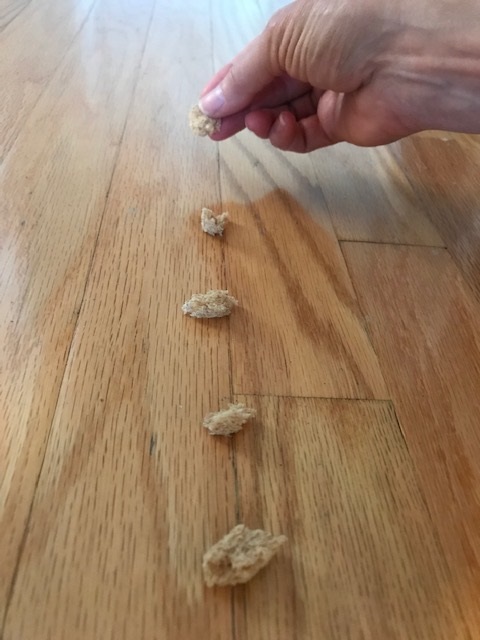
In a recent workshop, one of my creative participants created the verb “breadcrumbing.” I love it! It’s a great description of how we work to get someone to follow our train of thought and come to our conclusion.

When participants practice coaching in workshops, everyone uses a real-life challenge. We all coach each other on something that’s been on our to-do list or New Year’s resolution list for a while.

The coaching discussion goes through several stages. It follows the Discussion Process that I also use for effective communication and conflict workshops. We spend a long time asking questions in the Discover and Share step of the process.

And! – not just any questions. In the Discover and Share stage, we ask big-picture questions about how the person sees and feels about the situation. The first goal of coaching is to raise awareness, and we do that by getting the person being coached to try out different perspectives.

Here are some sample questions for the Discover and Share stage:

  • What obstacles are you facing?
  • What feelings are present?
  • Have you faced a challenge like this before? If so, how did you deal with it?
  • Do you see any patterns here?
  • If circumstances were perfect, what would the situation look like? Is there a way to create those circumstances?

If the person is really stuck, it’s time to get the creative juices flowing. We can ask them to look at their challenge from the eagle, ant, gold, flowing, sparkly, or dirt perspective. Just look around the room you are in and pick something. There aren’t any right answers or wrong questions. We just want to get them thinking creatively.

We do not want to lead them down a specific path. After we hear someone’s challenge, we sometimes feel that we know exactly what he or she needs to do. We aren’t supposed to tell people what to do in a coaching session, so we try and lead them to our solutions. We ask questions that begin with  “Don’t you think it would be a good idea to…” or “Have you thought about…” When I listen in on coaching sessions in workshops, I hear these types of questions a lot.

In one workshop, I stopped the group and reiterated how important it was to ask open-ended questions to help the coachees get unstuck from one single way of looking at the challenge. I told them that when they used leading questions, they were laying down a trail of breadcrumbs for the coachee to follow that led to their own solution. I reminded them that our goal is to let them wander around until they find their own path and solution.

When I checked in on one partnership, my creative participant said, “She was breadcrumbing me.” I knew exactly what she meant. Her partner had a solution to the challenge in mind and was trying to get her to find the same solution by asking leading questions.

It’s difficult not to breadcrumb someone. We have an idea and we want to help. The problem is that our solutions won’t usually work for other people. The solution is custom-designed for us and our lives. More importantly, the person being coached doesn’t feel any ownership of that particular answer.

My sister (who has given me permission to use her story) told me that she was due to see her therapist, but didn’t want to go because she hadn’t done her homework. She was supposed to write a list of something. I asked her why she hadn’t done it, and she said that she didn’t want to. As it turns out, it was the therapist’s solution to my sister’s problem.

“No wonder you haven’t done it!” I exclaimed. “It wasn’t your idea, and it doesn’t solve the problem as you see it.”

“You’re right,” she said. “I don’t see the point is taking time to make the list.”

The people we coach feel the same way. We just need to hang in there and have faith that with a little nudging and some curious questions that they will find the answers that make sense to them.


For a little bit of fun leadership development, join 53 (Two-Minute) Leadership Challenges at KathyStoddardTorrey.com.

Want to go further with your professional development? Check out the courses offered at PositiveEffectLeadership.com.

If you are interested in taking your career to the next level quickly, contact me for a sample coaching session at KSTorrey@tapferconsulting.com.


Conversation Container

21 Tuesday May 2019

Posted by Kathy Stoddard Torrey in #Communication, Emotional Intelligence, Leadership, Uncategorized

≈ Leave a comment

Tags

#conversationcontainer, #effectivecommunication, #LeadershipRules #LeadYourselfFirst #KathySays, #metaskills

PEA 600 px

The topic of how to create the best conditions for a conversation has popped up a lot lately. It’s not something that I see in leadership and conversation literature, but it is absolutely crucial to a successful conversation.

So what makes a conversation successful? There are at least a couple of things. From a leadership perspective, we want to develop or enhance a positive relationship. Leadership is all about creating positive relationships. I promise that this does not mean we are going to be pushovers.

Second, we want to have a clear outcome in mind. If an employee has a grievance, our goal is to find a resolution. We do not want to decide ahead of time what the resolution will look like; that’s what the conversation is for. You can read more about holding onto your outcome here.

We know that the beginning of a conversation is important. Couples relationship expert John Gottman found in his research that conversations that start harshly will end harshly more than 90% of the time. Those percentages are a good incentive to pay attention to how we open a conversation.

The way to ensure that we begin well is to pay attention to our mindset before we go into a conversation. Intentionally or not, we bring certain qualities or perspectives with us when we start talking with someone. If I’m angry, I might bring an adversarial attitude. If it’s important to me to look smart, I could bring in a know-it-all mindset. In systems coaching, we call those metaskills, and neither of those examples is going to help create a positive relationship or achieve the desired outcome.

Deciding what metaskills to bring into a conversation is harder than it sounds. In workshops, I ask groups to come up with the qualities and mindset that would create the most helpful container for conversations with a blamer, a screamer, a cryer, a know-it-all, and a person with an excuse for everything. When I walk around the room at the beginning of their discussions, I hear things like, “They need to understand…” and “We have to make it clear…” They are not talking about metaskills; they are talking about how to get to the outcome before they’ve even started this imaginary conversation.

I stop the discussions and redirect them. I ask, “Who do you need to be in order to have a reasonable and productive conversation with these people?” In other words, what type of person do you need to be? Do you need to be a patient person? A calm person? An angry person? An impatient person?

They go back to their group discussions and come up with great lists of qualities. Each group has a different type of person, but their lists contain similar metaskills. They decide they would want to be kind, patient, calm, firm, open-minded, respectful, empathetic, and professional. Being a person with those qualities will help them to have a reasonable conversation because they are creating a supportive container for the conversation. The qualities we embody are the metaskills that create the container.

Several clients have reported amazing outcomes from this practice. One told the story of facing a conversation with an employee who was angry about being passed over for a promotion. She took a minute and thought of how the employee must feel – angry, disappointed, and frustrated. He was entitled to feel that way. Although the decision was a fair one, it didn’t take away the sting of rejection.

My client’s normal style was to meet anger with anger. Instead, she met the employee’s anger with empathy and said things like, “Yes, I can understand why you are upset.” It was not the response the employee was expecting! He was expecting a good row! Instead, his anger dissipated, and the conversation turned to things that he could do to improve his chances next time around. By changing the container for the conversation, my client changed the entire tenor and outcome.

It’s important to note that kindness and firmness are not mutually exclusive. We can hold people accountable in a firm way and also be kind. It’s easy if we truly have the other person’s best interests at heart. Exceptional leaders know that their success is dependent on the success of everyone around them, which means they hold high standards and help people meet them. The best leaders know that figuring out how to meet goals and standards is a dialogue that happens best in a conversation container of respect and a true desire for others’ success.


Creating Positive Relationships

14 Tuesday May 2019

Posted by Kathy Stoddard Torrey in #Communication, Emotional Intelligence, Leadership, Positivity, Uncategorized

≈ 1 Comment

Tags

#LeadershipRules #LeadYourselfFirst #KathySays, #noticethegood, #positiverelationships, Positivity

mom and son 600 px

One of the essential elements of extraordinary leadership is the ability to create and maintain positive relationships. In fact, we are happier and more successful as parents, spouses, friends, family members, and humans if we are amidst positive relationships. As leaders, we cannot cultivate the personal power that we need to motivate others unless we can create positive relationships. You can read more about the power of positivity and positive relationships here.

Research shows we need at least a five-to-one ratio of positive interactions to not-positive interactions in order to maintain a positive relationship. In one study, simply asking a student how homework was going was considered a negative interaction. Wow. That sets the bar for a positive interaction pretty high. The reality is that we don’t have a lot of positive interactions with others.

I first realized how few positive things that I was saying to others when my sons were in high school. I was in my coach training with the Coaches Training Institute. We had talked about the power of appreciation and acknowledgments. I realized that some days, I didn’t say even one nice thing to my children. I committed to saying at least one nice thing a day to each of them.

This tactic is a great way to start creating positive relationships. It’s not as easy as it sounds, but it is doable. It’s essential that the acknowledgment or appreciation be sincere. Bad nonverbal communication can kill a nice statement. Any hint of sarcasm will sabotage your efforts. Start by saying things that you truly believe.

The comments must never be about the appearance of a person; that is a compliment and not what we are going for. We want to say something meaningful about the person, which is an acknowledgment. Our other option is to show appreciation for an action. For me, appreciation is easier, so I started with that.

When I saw my sons doing something that I wanted to see them do again, I made a statement about it. I said things like, “Thank you for putting your dishes in the sink. I really appreciate it.” I meant it! I did appreciate them putting the dishes in the sink. I appreciated when they put away their laundry, drove safely, helped each other, and mowed the grass.

After telling them what I appreciated, I then told them why. The why is an important piece of the appreciation message. I was grateful when they mowed the lawn because it was an enormous effort for me that wiped me out for the rest of the day when I did it. I appreciated them putting the dishes in the sink because it made cleaning up after meals much faster – and I didn’t like that task any more than they did.

People are more likely to repeat the action when you comment on it in a positive way. They know you like it, and they like being appreciated. Maybe they never saw it as important before and now realize it’s a big deal to you. For whatever reason, people do things more often when they feel that those things are appreciated. Appreciation also builds the overall positivity of a relationship. It’s a win-win.

Acknowledgments are more difficult and more powerful. When we give someone an acknowledgment, we are commenting on positive qualities of that person – not their actions or their appearance – though an acknowledgment can begin by noticing an action. After all, we show our qualities through our actions.

I could say, “I saw you helping your brother with his physics homework. You are a kind person who takes time to help others.” Here is another example: “I was watching you work out in the driveway. You really are consistent in your exercising, and you are getting stronger. I admire your willpower and determination.”

It’s essential that the things we say are true. We can’t run around saying things we don’t mean. Trust me, people can tell if you are insincere. As I looked for positive things to say to my sons who were and are outstanding human beings, I wasn’t making things up. All their great qualities were there. Some I was aware of. Others I noticed for the first time as I began to really pay attention to who my sons were.

The sad part is that I had not told them much of the good I saw and felt for them. I’m not sure why. Part of the reason harkens back to the fact that we are hardwired to notice and hang on to the negative. Noticing the good around us is not something that comes naturally or that we are trained to do. I’m sure the fact that they were surly teenagers was also a contributing factor. Also, I just wasn’t very good at sharing feelings. Looking for positive actions and the good in others is a new habit that we must form. Forming new habits takes work.

I started by saying one positive thing a day. Weirdly enough, it was difficult, and I would forget my intention. However, over time giving appreciation and acknowledgments got easier. It felt more natural. I was in the habit of looking for good things and commenting on them. Believe me, that is huge! The ability to easily and naturally see the positive qualities and actions of others is crucial for great leadership.

My two sons were suspicious of my new behavior at first. I was talking to them in a different way suddenly. I’m sure that they wondered what I was up to. I told them after a bit. Transparency is usually the best way to go. I told them that I was working to notice and comment on the good things around me and that they were definitely some of the best things around me.

A delightful outcome that I didn’t see coming was that my high school-aged sons began saying nice things back. They told me when they appreciated things I was doing. They even pointed out some of my strengths. I cannot begin to express how touching that is. The dynamics of our relationships changed for the better.

Violá! We created positive relationships by increasing our number of positive interactions. When I say something positive about someone, it is positive for both of us, and vice versa. The boys and I enjoyed each other’s company more and increased our level of trust, which led to more meaningful conversations.

Saying one positive thing to someone every day is a simple way to begin to create a positive relationship. Man, there is no better way to decrease our expenditure of emotional pennies than to create positive relationships. The results are extraordinary, which is what we are looking for in extraordinary leadership.


For a little bit of fun leadership development, join 53 Leadership Challenges at KathyStoddardTorrey.com.

Want to go further with your professional development? Check out the courses offered at PositiveEffectLeadership.com.

If you are interested in taking your career to the next level quickly, contact me for a sample coaching session at KSTorrey@tapferconsulting.com.
 

 Going All In

07 Tuesday May 2019

Posted by Kathy Stoddard Torrey in Emotional Intelligence, Leadership, Motivation, Resilience, Uncategorized

≈ 4 Comments

Tags

#LeadershipRules #LeadYourselfFirst #KathySays, #mindset, #MovingForward

Plan B 600 px

I recently spoke to my Ex-Husband, Oldest Son, and Youngest Son all in one day. There was a time when I would have felt that it had been a wonderful day. However, times are not what they were, and all three conversations were distinctly unsatisfying.

The bottom line is that three people who were once closest to me and each other aren’t close at all anymore. The reason is a series of complicated stories that are not mine alone to tell. It feels like a Greek tragedy where everyone has done what they had to do to be true to themselves and no one is wrong, yet no one is exactly right, either.

The conversations unsettled me. I wallowed a bit in the fact that I have failed in one of my life’s major goals. I spent decades creating a loving family. At 22 years old, I decided to marry my Ex and make family the center of my life. I consciously decided to make family my first priority and career second. I gave up a job offer at a prominent PR firm to follow my new husband to Germany. It was a choice, and I made it on purpose.

My Ex and I had six years together before we had Oldest Son. They were very happy times. We were young, healthy, hopeful, and in love. My decision to put family first appeared to be a very good one.

Then we had Oldest and Youngest Sons within two years of each other. We were a young military family who stuck together as we moved. My mother moved in with us and made us a happy family of five. My decision to put family first appeared to be a very good one.

The kids grew, and we were all a team. We all supported my Ex in his military career. It felt good to have common goals and to work together at Cub Scouts, Boy Scouts, and military life. My mom’s presence made our lives easier and more fun. I enjoyed all the phases of being a mom and staying home with my two boys. My decision to put family first appeared to be a very good one.

We had rough years individually and together. The boys were teens who made some bad teenage decisions, but we got through. They became young men in college who made some more not-great decisions, but we got through. My Ex deployed twice, and I had brain surgery during the first deployment. Tough times, but we got through. I began to work and felt like I could jump in and progress quickly in a long-postponed career. My decision to put family first still felt like a good decision.

My decision to put family first was influenced by a story that my high school basketball coach told me. He was divorced and single at that time. He told me that he had spent Christmas day alone, driving through town looking at all the lights. He said it was nice, but the melancholy tone in his voice and the pained look in his eyes told a different story. At 15 years old I decided that I never wanted to find myself in that position. I wanted always to have family around me for holidays.

Fast forward to now. I live alone in a small condo. I share walls and ceiling with others. My beloved Honda Pilot whom I call Amber sits out front with no shelter. She is my view from my front windows. Other people’s vehicles are my view in the back. Not one relative lives in the state that I live in. Oldest son lives with my grandchildren in New Jersey. Youngest son and his new bride live in Texas near my sister and her family. I am now almost 60 years old. I’ve spent a lifetime creating a family that has disintegrated. Putting family first doesn’t feel like the best decision I’ve ever made. Maybe it was and I just failed. I failed at my life’s main work.

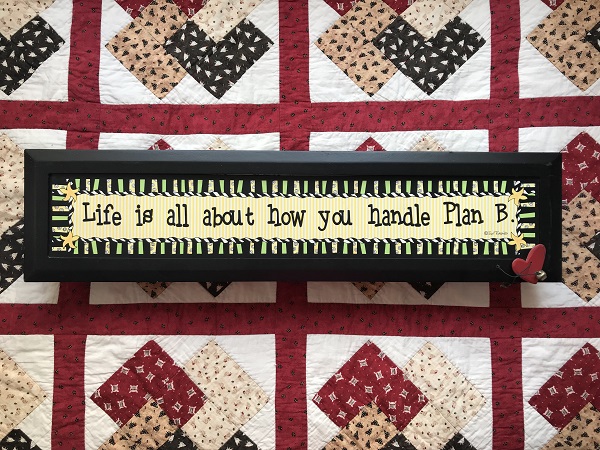
Now, I spend most of my time alone. I have good friends where I live. I enjoy them and depend on them. I am working to create a community here. I visit Oldest Son and Youngest Son individually. It is Plan B. Plan A failed, and I feel like a failure trying to make the best of a situation I do not want to be in.

After wallowing about the unplanned results of my life and my feeling of being a complete failure, I remembered the most valuable lesson that I learned when getting my MBA. It was taught in terms of financial investments, but it applies to all aspects of life. When deciding what to do when moving forward, do not consider the sunk costs – what’s already been invested. Forget the past, and look hard at the present. Given the current situation with no thought to the past, what is the best thing to do? I translate that to: We are where we are. What do we do from here? More accurately now: I am where I am. What do I do from here?

Not considering past expectations removes an enormous emotional burden. I use a hurricane metaphor to help me get past the recent changes in life. A huge hurricane came through that destroyed everything and caused me to start life again. It wasn’t my fault, and there was nothing I could have done to avoid it. That mindset helps me see the current situation more clearly because it clears all regrets. Whether it’s true or not doesn’t matter. I am where I am, and blame and failure are irrelevant. Nothing can change the present.

The future is another matter. It can be changed! Or not. I could continue to wallow and rewind the past in my head, which would lead to an icky future that is not much different than the present. Good thing I have a Magic Wand of Destiny and the Power of Choice. I’ve written a lot about goals, making intentional choices, finding your Big Why, and taking baby steps forward. Insert all of that information here. I am assessing my current situation objectively, finding my motivation, and making a plan.

However, there is another thing to consider that will help – mindset. I read a story in leadership workshops from the book Whistle While You Work by Richard Leider and David Shapiro. Leider tells about a time that he went on an East African adventure with Outward Bound. The group found themselves walking through tall grass, and one person saw a lion. The grass is called Lion Grass because it’s one of a lion’s favorite hunting grounds.

The gravity and danger of their situation suddenly hit home to the person who had seen the lion. He sat down and refused to go on. He wanted to turn back, but the truck that had dropped them off was en route to the meeting place ahead of them. There was nowhere to go back to. I can definitely relate to the situation and the feeling!

The leader talked with the shaken man and explained the situation. It didn’t help. The man refused to move. Then the leader offered an Outward Bound motto: “If you can’t get out of it, get into it!” In other words, if there is no way to remove yourself from an unwanted situation, the answer is to completely get into it so you can move yourself through it as quickly as possible.

I’ve actually reminded myself of this concept several times throughout my life. If I took on a task or job that I didn’t like but didn’t want to quit, I chose to completely get into it. The journey was less painful, I was successful, and the end seemed to arrive more quickly.

So, what does “getting into it” look like? It’s about being all in. A friend once told me that she liked watching me play basketball in high school because when I played, I was all in. To me, it means that no part of me is playing the observer; all of me is completely present in the experience.

That is how I want to be now as I create a life that is nowhere near the expectations I held for decades. I want to be all in. I want to really get into it. I want to be fully engaged with no part of me sitting on the sidelines complaining or being hesitant. I am drawing my line in the sand and stepping over it into a life I completely accept and intend to enjoy. I am where I am, and I’ve decided to like it.

P.S. This little girl is my current role model: https://www.youtube.com/watch?v=qR3rK0kZFkg


For a little bit of fun leadership development, join 53 Leadership Challenges at KathyStoddardTorrey.com.

Want to go further with your professional development? Check out the courses offered at PositiveEffectLeadership.com.

If you are interested in taking your career to the next level quickly, contact me for a sample coaching session at KSTorrey@tapferconsulting.com.

Working at Renewal

30 Tuesday Apr 2019

Posted by Kathy Stoddard Torrey in Emotional Intelligence, Mindfulness, Positivity

≈ Leave a comment

Tags

#LeadershipRules #LeadYourselfFirst #KathySays, #mindfulness, #renewal, Emotional Intelligence, Heart, Meditation, Mindfulness, Positivity

I had a revelation while meditating one morning.  It wasn’t a World-Altering Revelation.  It was more of a Well-That-Will-Make-Life-Better Revelation.  Frankly, I have those pretty often because I’m a thinker, an analyzer, a how-can-we-make-this-easier kind of person who usually has her brain turned on and in high gear.

I don’t meditate as regularly as I’d like, but I’m working on it in light of research by Richard Boyatzis, coauthor of Primal Leadership.  He found that one of the antidotes for leadership burnout is mindfulness and that can be achieved with meditation.  (In case you are wondering, the other avenues of renewal are compassion, playfulness, and hope.)  The key in all categories of renewal is that you must do at least one from any category EVERY DAY!  You have to work at rejuvenation!

Well, that isn’t exactly true and the idea of “working” at meditation was altered by my morning revelation.  I’ve always looked at meditation as an exercise in self-discipline and mind control.  The goal is a sort of Vulcan-like ability to stay laser-focused during meditation.  The result is the ability to carry that focus and calm out into the world.  Don’t get me wrong, self-discipline is important; it’s one of the major pieces of Emotional Intelligence, but it wasn’t helping me on the renewal front as a way to meditate.  Convincing my brain to sit still and be quiet is exhausting, not rejuvenating!

I discovered my new way of viewing meditation by accident.  I was trying different mantras and imagined what words or sounds my leadership series participants would come up with if I had them do this exercise with me.  With each inflow and outflow of breath, I could hear them thinking, “Hate…… this” or “Help….. me.”  They have resisted my meditation exercises in the past.

Then I started thinking of things I could suggest to them instead.  I started with:  “Love…. Joy,” “Peace…. Harmony,” “Calm…. Life.”  Then I started getting silly: “Puppies…. Kittens,” “Sweet-smelling….. Babies,” “Brilliant… flowers.”  I was reminded of the pictures that I flashed up on the big screen during one of our sessions.  I showed them cute puppies, adorable babies, alluring kittens, and beautiful flowers to let them feel a Positive Emotional Attractor state (PEA) – a term used by Boyatzis to describe a state when we are more open to influence and more creative.  I’ve called it “Finding Your Happy Place” in the past, but now I think it’s more accurate to describe it as “Relaxing Into Your Happy Place.”


It occurred to me that getting into the PEA was the real fuel for renewal.  I felt lighter, happier, and more relaxed as I continued to visualize happy thoughts. I maintained the focus on the feelings I was having, and it felt like I was activating my heart.  I like that phrase – activating your heart.

The lovely side effect of activating the heart is that it deactivates the brain.  When I focus on feeling, it’s really hard to think.  What I realized is that for meditation to have a regenerative effect for me, it must be an exercise in feeling and activating the heart.  Once my heart is in the driver’s seat, my brain really can get some rest and that results in me being a calmer, nicer person.

Now that I think about it, this revelation could lead to a more positive world if we all managed to improve our outlook and increase our positivity through heart-activating meditation.  Maybe it was a World-Altering Revelation after all.

The 3rd Entity

16 Tuesday Apr 2019

Posted by Kathy Stoddard Torrey in Emotional Intelligence, Systems Coaching

≈ Leave a comment

Tags

#3rdEntity, #LeadershipRules #LeadYourselfFirst #KathySays, #relationshipsuccess, #systemscoaching

One of the ways that I pass the time when I am sick is to watch video clips on Facebook. I mostly watch bits of The Big Bang Theory and talk shows. One evening, I ran across an interview with Henry Winkler, who was talking about having been married for 40 years. The host asked Winkler for advice that he could offer. Winkler gave a brilliant two-item list.

First, he said, “You have to have the will. You have to want the marriage to work.” It’s a concept that I’ve been discussing in leadership workshops lately. In systems coaching, we call it caring about the 3rd Entity.

Two or more people together create a system. Their relationship, which we call the 3rd Entity, is completely unique to that group of people. It makes sense if you think about two people. Person A has needs, wants, and concerns. Person B has needs, wants, and concerns. Their relationship is the third piece of their system. The 3rd Entity (a.k.a. system and relationship) has its own needs, wants, and concerns.

Something might be great for Person A, but it’s important to also ask if it’s great for Person B. Even more important is to ask if it’s great for the 3rd Entity. In other words, would that something help or hurt the relationship?

For a system to work, everyone in the system must care about the health of the system. For example, if I am in an organization and I’m only concerned with my own well-being, I am not an asset to the organization. In that scenario, I only care about myself. I don’t give a hoot about the health of the 3rd Entity. Honestly, people with that sort of attitude are a huge detriment to the success of any group.

If we look at it from Winkler’s perspective, a marriage cannot work unless both people truly care about the health of the relationship and are willing to put its needs above their own when necessary. If one spouse doesn’t care about the marriage – doesn’t have the will or determination to work at maintaining it – then the marriage is doomed.

The second item that Winker listed was “ears.” He went on to explain that we say something to our spouses and think we are being clear in what we mean. However, the listening person often interprets the words differently. Winkler said that the listening spouse’s interpretation is the one that is valid. The speaker must accept that the intended message did not land as desired and that the interpretation is what the conversation must use as a foundation moving forward.

Many times we intend for our words to have a certain effect, but they don’t. For example, we could say something that is meant to be encouraging, but it’s taken to be patronizing. We think we are being clear, but our message can be interpreted in several different ways. There is a disconnect between our intent and the true outcome.

As a result, we want to be aware of people’s reactions to our words. If the reaction is not what we would expect given our intent, we need to ask the person what is going on for him or her. We notice by paying attention to people’s nonverbal communication. Nonverbal communication includes facial expression, tone of voice, and body language. Any time that you’re getting a verbal or nonverbal message that doesn’t seem appropriate, check on it with the person.

I agree with Winkler’s assessment of the importance of accepting that the outcome of our words is not always in alignment with our intent. The relationship/system/3rd Entity cannot stay healthy unless each individual in it feels heard and valued.

He actually summarized the balance of systems coaching really well. We must protect and value both the 3rd Entity and the individuals of which it is comprised.


For a little bit of fun leadership development, join 53 Leadership Challenges at KathyStoddardTorrey.com.

Want to go further with your professional development? Check out the courses offered at PositiveEffectLeadership.com.

If you are interested in taking your career to the next level quickly, contact me for a sample coaching session at KSTorrey@tapferconsulting.com.

Horton the Elephant: Leadership Role Model

09 Tuesday Apr 2019

Posted by Kathy Stoddard Torrey in #Communication, Emotional Intelligence, Leadership

≈ Leave a comment

Tags

#consistency, #HortonRules, #LeadershipRules #LeadYourselfFirst #KathySays, #StandUpTechnique

For the last week or so, I’ve helped take care of my grandchildren. I have a spirited granddaughter who is two years old. Her mother takes a parenting class, and after the last class, she wanted to set up a game plan. I’m usually game for a good game plan and I do try to stay consistent with their parenting standards.

She said that the goal of the week was to immediately follow up on any request made of my granddaughter that was ignored. We had all gotten into the habit of telling her something several times before standing up and ensuring that she did it.

It is a parenting technique that I believe in whole-heartedly. Her comments reminded me of my resolve when my children were little to make sure that there was no question about whether or not I meant something when I said it.

I went to playgroups and saw other moms who didn’t back up what they said. They sat in the same spot and said, “Honey, don’t do that” over and over while Honey continued to do as she pleased. Honey knew her mom wasn’t standing up, I knew it, everyone in the room knew it, people passing by knew it as did their dogs. There was no reason for Honey to stop because there were never going to be any consequences. Honey’s Mom was never going to stand up. I call getting up immediately when an instruction is ignored the Stand Up Technique.

The Stand Up Technique also applies to great leadership. As leaders, we must be ready to follow up on the tasks we assign. If it becomes apparent to everyone that we are going to ask people to do things and then never make sure those things are done, it becomes highly unlikely that the things will get done. Why should anyone bother when everyone knows that the leader is not going to Stand Up and make sure that there are consequences for tasks left undone?

It is time intensive in the beginning to ensure everyone knows that you mean business. I tell the following story in leadership workshops. Back when circuses kept elephants in chains, handlers put small elephants in big metal cuffs with thick chains attached to long spikes. The baby elephant would try and try to get free but gives up after a while. When the elephant was grown, its handlers could use a small cuff, chain, and spike. The elephant didn’t believe that there is a point in trying to get away. We want to give everyone around us that same impression.

If we begin by ensuring all tasks are done and then administering consequences when they are not, we let everyone know that there is no point in trying to get away with not doing things. They begin to feel confident that we will always check up on things and give consequences as appropriate. After a while, no one even considers not doing a task. What’s the point? Like the large elephant, they’ve decided that resistance is futile.

I feel a need to point out that “following up” and “giving appropriate consequences” does not mean yelling or shaming. We want everyone who works with us to be successful, and that is the mindset that we bring into every conversation. We also want to be respectful of others all the time!

Using the Stand Up Technique also gives us, as leaders, a good yardstick for our words. If I ask someone to do something, am I willing to follow through and do what needs to be done to ensure my request is completed? If not, I should keep my mouth shut. I ruin my credibility if don’t see things through to the end.

I am reminded of a statement by Horton the Elephant in Horton Hatches the Egg. He tells the terrible mother Mayzie that he will sit on her egg and protect it. Through a series of challenges that include hunters, Horton refuses to give up the egg. He says, “I meant what I said, and I said what I meant. An elephant’s faithful one hundred percent.” We all need to be elephants in that we are one hundred percent faithful to the words that we speak.

The first question we should ask is “Does it matter?” Does it matter if someone does it his or her own way? Does it matter if they fail? Does it matter if that task is done at all? If the answer is “Not really” or “Only to me,” let it go.

Marshall Goldsmith lists a couple of good questions to ask ourselves in Triggers: “Will my input improve this situation?” and “Am I truly helping or trying to prove how smart I am?” Asking ourselves these questions can get us to pause and be selective about the tasks that we assign and the things that we say.

The bottom line is that everyone, both children and adults, will take our requests to heart if we mean what we say and ensure that we said what we meant. Horton is a great role model.


For a little bit of fun leadership development, join 53 Leadership Challenges at KathyStoddardTorrey.com.

Want to go further with your professional development? Check out the courses offered at PositiveEffectLeadership.com.

If you are interested in taking your career to the next level quickly, contact me for a sample coaching session at KSTorrey@tapferconsulting.com.

Erasing the Past

26 Tuesday Mar 2019

Posted by Kathy Stoddard Torrey in Emotional Intelligence, Leadership

≈ Leave a comment

Tags

#erasingthepast, #LeadershipRules #LeadYourselfFirst #KathySays, #TheOrville

I recently watched an episode of The Orville. For you non-sci-fi people, it’s a TV show about people exploring space. It’s similar to Star Trek: The Next Generation, but with fewer leadership paradigms and more crass situational comedy. Sometimes, however, they have a gem of an episode.

In the one I just watched, a time capsule from 2015 has been discovered, and an iPhone is in it. They figure out how to get the phone up and running. It belonged to a young woman named Laura who left all of her texts, emails, photos, songs, etc., on the phone so that the future could get a glimpse of her life.

One of the characters, Gordon, finds her enchanting and gets the ship’s computer to create a simulation based on the information in the phone so that he can experience Laura’s world in the holodeck. (If you have no idea what a holodeck is, email me. We need to talk.) The doors to the holodeck open, and Gordon walks into a party at Laura’s house.

Gordon meets the recreated Laura and falls in love with her. Unfortunately, the simulation is based on information in the phone, and the real Laura got back together with her boyfriend in 2015. Gordon is heartsick and has the computer delete the boyfriend from the program. When he re-enters the simulation, Laura is a different person.

She doesn’t play angsty songs about love in a dive pub. She is more driven to move up at Macy’s, where she works. She is still charming but different. She turns out to be a different person when her boyfriend is completely deleted from her life. He was the one who encouraged her to sing and perform.

Of course, the show got me thinking about what I would be like if I had the ability to delete people from my life. Not just delete them now, which I can actually do to some extent, but to erase them so that I had never interacted with them.

The first person to come to mind was my father. We have a stormy history. Obviously, if I completely delete him, I delete myself. He is my father. So let’s just look at how I would be different if he had not had any part in my growing up.

It’s an interesting question because I get some of my best and worst qualities from him, I think. Of course, there is no way to know for sure. This is just an interesting game.

My father told me when I was young that I could do anything. I played softball in elementary school and pitched fastpitch in high school. On the ring finger of every glove that I owned he wrote, “This is a winner’s glove. I never miss a ball.” I think a lot of my confidence comes from him.

I believe that my silly bravery comes from him also. I am not afraid to make a fool of myself. As a result, I am not afraid to take risks. I have a clear memory of skipping with him through a parking lot on our way to see a movie. It was, in fact, the second movie of the day for us. We saw The Sting with Redford and Newman then drove across town to see another one of the duo’s films, Butch Cassidy and the Sundance Kid. I remember people snickering at us as we skipped and really not caring.

The other thing he told me over and over was “Make them come up to your level. Do not lower yourself to theirs.” As a tall, opinionated, and pretty young girl, I took a lot of mean hits from classmates. I started at a private school in 8th grade, where they were particularly vicious in the beginning. Even the teachers were mean to me. I have tried to live by that phrase for all of my life – even when dealing with my father, who is not always kind, truthful, or supportive.

I also get my temper from him, which I’ve worked most of my life to control. He passed on his contempt for others who are different than us or less fortunate. Man, that one is hard to spot and change because it feels like truth until you really bring it to a conscious level and examine it. I work to see everyone as a person of value with dreams and needs equal to my own. I slip sometimes, but it’s at a conscious level that I can now deal with.

I could go through the same “what if I delete them” exercise with my ex-husband. We were married for 36 years, and he influenced who I’ve become more than my father did.

When we were separated, I went through our pictures and belongings, deciding what to keep and what to leave behind. I remember sitting in a closet under the eaves of our home surrounded by albums and boxes that contained 35 years of photographs and memories. I felt a real urge to destroy everything that had to do with my ex. It was a tumultuous time, and my emotions were very raw. Then I realized that I would have to delete 35 years of my life to do that. However, it’s really, really hard to be mad at a person now and not take it out on every memory with that person.

Hurricane Irma had just devastated much of Florida. I thought of the people who had lost all of their belongings and pictures. Some had lost loved ones. They were going to have to rebuild their lives from scratch. In a way, I was experiencing a hurricane in my life.

I could see the disaster coming. I was divorcing and moving out of my home. I could prepare for it, but I couldn’t avoid it. The hurricane would come in and take away everything familiar. I would put some belongings in storage and load the rest up into a U-Haul trailer that I would drive away with. I planned to be homeless for a while. I would rely on the kindness of friends and family.

In my mind, I decided that the husband in this history of photos was lost in my metaphorical hurricane. I loved him, and I missed him. I still had to deal with this husband in the now that I wasn’t terribly fond of, but I wanted to find a way to keep hold of the good memories. I was made from all of those experiences. I am who I am today because I was married to a man who I loved for more than 30 years.

He helped me develop my corny sense of humor. I hear one of his favorite phrases, “Maybe, we’ll see,” in my head all of the time. It represents a less rigid approach to life that I learned from him. I cherish the sense of belonging and teamwork that I experienced in our marriage. It was a great feeling that I am now working to recreate with friends and clients. I am more relaxed, fun, and resilient as a result of our relationship.

It was freeing to look at the photographs without malice. This lovely guy was taken by the hurricane. I can remember and love him and the memories.

I wouldn’t delete my ex from my past any more than I would delete my father. I have little to no interaction with either now, but it’s important for me, my sanity, and my well-being to feel gratitude toward them both for helping me develop into the person that I am now. The good times and the bad helped me see the good in myself and build resilience, which comes in mighty handy in life.

In The Orville, Gordon decided the same thing. He put the boyfriend back into the program, went into the simulation, sang a song with Laura, and said goodbye to both her and her boyfriend.

Even the cruelest people in our pasts have helped us to develop into who we are now. We get to choose how we grow by how we react and what we take away from the experiences. We lose all the opportunities for growth and self-awareness if we negate the person and ignore the experiences.

In my mind, I give difficult people in my past a hug, thank them for the lessons, wish them well – then tell them not to let the screen door hit them in the butt on their way out the door. Boundaries in the present are essential, but that’s a topic for another time.


For a little bit of fun leadership development, join 53 Leadership Challenges at KathyStoddardTorrey.com.

Want to go further with your professional development? Check out the courses offered at PositiveEffectLeadership.com.

If you are interested in taking your career to the next level quickly, contact me for a sample coaching session at KSTorrey@tapferconsulting.com.

Life Is a Treasure Hunt

19 Tuesday Mar 2019

Posted by Kathy Stoddard Torrey in Emotional Intelligence, Leadership, Positivity

≈ Leave a comment

Tags

#, #LeadershipRules #LeadYourselfFirst #KathySays, #treasurehuntlife

When I was growing up, I read a lot of Sherlock Holmes. I still love following a mystery and considering each event and detail as a possible clue.  Of course, I never have the whole thing figured out when Mr. Holmes exclaims, “Elementary, my dear Watson!”, but I always have my suspicions.

Looking at each detail of the story for meaning is one of the things that I enjoy most in Sherlock Holmes’ adventures. I didn’t think of looking for meaning in the details of my own life until I read The Celestine Prophecy years ago. I don’t remember many details of the plot, but I did take away the thought that people and challenges might be put in my path for a reason.

I’ve always fought against the idea of “destiny.” What is the point of living life if you are just living out a script set in stone? However, I like the idea of looking for and following clues because I’m still in control in that case. I always have the ability to choose whether to follow the clue or not, but recognizing it as a possible turning point keeps me from blundering blindly through life without making a conscious choice.

Of course, that doesn’t mean that I have to jump on every opportunity that comes my way. If I did, I’d buy every single item advertised on TV and fall for every marketing gimmick. The ultimate choice is mine. I find that my stomach is my most reliable yardstick for making a decision that’s right for me.

I was offered a discount on a leadership school that is quite expensive. Two trainers who I respect from my life coach class recommended me. I felt a real obligation to live up to their expectations and to take advantage of the opportunity in front of me. In the end, I realized that the thought of taking on such a huge financial burden was making me crazy, and my stomach was in knots. When I let go of the opportunity, my whole body relaxed, and my stomach unclenched and gave a sigh of relief.

In her book The Unmistakable Touch of Grace, Cheryl Richardson writes about a guiding hand influencing our lives. She calls it “grace” and writes, “Every event we experience and every person we meet has been put in our path for a reason. When we awaken to this fundamental truth, we begin to understand that a benevolent force of energy is available to guide and direct our lives.”

Richardson advocates asking for that help from the Universe, or whatever name you use for your higher power. Asking a higher power for help isn’t all that odd an idea. Many people pray to God and ask for help and guidance. Here is the phrase that Richardson uses: “I am open and receptive to the power of grace in my life now. I ask to be shown clear examples of how this energy is operating in my life.”

My best example of grace stepping in to lend a hand came the morning that I was struggling to get the convoluted idea of grace that was in my brain untangled, down my arms, and into my hands to type. I was about to give up when my friend Rose called. She said, “I thought that you could use a smile this morning.” I told her that I always appreciated a smile, and she asked me what I was up to.

I started trying to explain the concept of grace and clues and choice. My explanation seemed lifeless and vague, but she sent me scrambling for a pen with her immediate comment, “Oh, the treasure hunt to fulfillment.” Wow! Thank you, Universe, for sending me Rose this morning!

“That is the way I live my life,” she continued. “I see myself surrounded by opportunities that I get to choose from.” It’s way beyond coincidence that she telephoned just as I was grappling with Cheryl Richardson’s call for grace.

Rose’s metaphor of life as a treasure hunt reminded me of a game that I used to play with my children. They were too young to read, so I sketched various places around our yard and used them as clues.  I handed them a picture of the slide. They would run to the slide, where a picture of the basketball goal waited for them. They ran to each place eager to find out where the next clue led.

There are a lot of similarities between the kids’ game and life. First, there’s no way to see the end from the beginning. Second, to get to the end and win the game, you have to follow all of the clues in a specific order. You focus all of your energy on the visual image of your immediate goal. Once you reach that goal, another one waits for you that will take you further along your adventure. The game of life is fun when it’s a puzzle and a journey into the unknown that requires brains, courage, and tenacity.

There are those who disagree with my perspective on life, and I wouldn’t argue with them. They have just as much a chance of being right as I do, but being “right” isn’t what is important. Whether or not it’s true, isn’t it a more fun way to look at life? We have two choices. One is to go through life feeling that we are buffeted by the winds of fortune and are forced to fly hither and yon like a feather with no say in where we go. On the other hand, we can see ourselves surrounded by clues and gifts that are ours for the taking. Each day is an opportunity to learn and grow. Each person is a potential guru with wisdom to share.

Now I will confess that I wrote this blog back in 2007. It represents a turning point in how I view life. I still work to see life as Rose does – a treasure hunt to fulfillment. I will admit that the treasure hunt has taken me to some dark and scary places in the past dozen years or so. However, the journey is an adventure if you expect tokens and clues that will lead you into sunlit happiness. An adventure is something that I can look forward to living.

Life is a grand adventure when each moment could uncover a clue that leads to the treasure of living our best lives! As my friend Sherlock Holmes would say, “Come, Watson, come! The game is afoot!”


For a little bit of fun leadership development, join 53 Leadership Challenges at KathyStoddardTorrey.com.

Want to go further with your professional development? Check out the courses offered at PositiveEffectLeadership.com.

If you are interested in taking your career to the next level quickly, contact me for a sample coaching session at KSTorrey@tapferconsulting.com.

← Older posts
Newer posts →

Follow Blog via Email

Enter your email address to follow this blog and receive notifications of new posts by email.

Join 214 other subscribers
  • RSS - Posts

Categories

Archives

  • December 2020
  • November 2020
  • October 2020
  • September 2020
  • August 2020
  • July 2020
  • June 2020
  • May 2020
  • April 2020
  • March 2020
  • February 2020
  • January 2020
  • December 2019
  • November 2019
  • October 2019
  • September 2019
  • August 2019
  • July 2019
  • June 2019
  • May 2019
  • April 2019
  • March 2019
  • February 2019
  • January 2019
  • December 2018
  • November 2018
  • October 2018
  • September 2018
  • August 2018
  • July 2018
  • June 2018
  • May 2018
  • April 2018
  • March 2018
  • February 2018
  • January 2018
  • December 2017
  • November 2017
  • October 2017
  • September 2017
  • August 2017
  • July 2017
  • June 2017
  • May 2017
  • April 2017
  • March 2017
  • February 2017
  • January 2017
  • December 2016
  • November 2016
  • October 2016
  • May 2015
  • April 2015
  • March 2015
  • February 2015
  • January 2015
  • February 2014
  • January 2014

Powered by WordPress.com.